

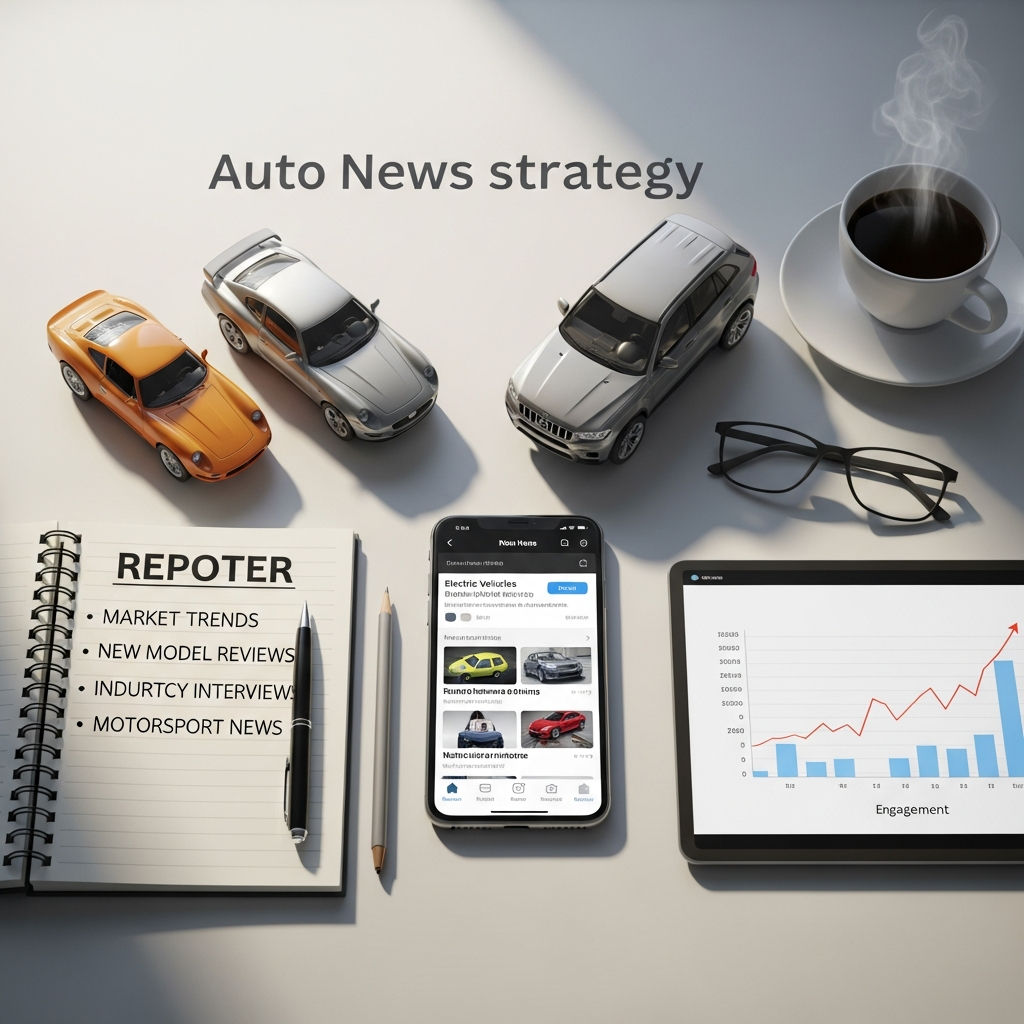
How to Build an Essential Auto News Strategy
The automotive industry is currently undergoing its most significant transformation since the invention of the assembly line. With the rapid shift toward electric vehicles (EVs), the integration of autonomous driving technology, and the constant flux of global supply chains, the demand for timely, accurate, and engaging automotive news has never been higher. For digital publishers, brand managers, and content creators, building a robust auto news strategy is no longer optional—it is the key to capturing a massive, high-intent audience.
Whether you are launching a new automotive blog or looking to revitalize an existing news desk, a structured approach is required to cut through the noise. This guide outlines the essential steps to building a high-impact auto news strategy that drives traffic, builds authority, and fosters a loyal community.
Understanding the Automotive Media Landscape
Before publishing your first headline, you must understand the ecosystem. The auto news world is divided into several distinct segments, each with its own audience behavior. There is “breaking news” (product launches, recalls, executive moves), “review-based content” (test drives and consumer advice), and “enthusiast content” (tuning, classic cars, and racing).
An essential strategy requires you to decide where your brand fits. Trying to cover everything from Formula 1 to semi-truck logistics can dilute your authority. Instead, identify a primary niche—such as sustainable mobility, luxury performance, or affordable family vehicles—and use that as the foundation for your editorial voice.
Step 1: Identifying Your Target Audience
A successful auto news strategy begins with a deep dive into audience demographics. Car buyers have different needs than car enthusiasts. To build an effective strategy, you must categorize your readers into personas:
- The Practical Buyer: Looking for reliability ratings, fuel economy, and safety features. They care about news regarding MSRP changes and new model releases.
- The Tech Enthusiast: Focused on software updates, EV range, battery chemistry, and self-driving capabilities.
- The Gearhead: Interested in horsepower, torque, manual transmissions, and aftermarket modifications.
- The Industry Insider: Needs to know about mergers, acquisitions, manufacturing shifts, and stock market impacts.
By defining these personas, you can tailor your content mix to ensure you are providing value to the specific people you want to attract.
Step 2: Establishing Credible Sourcing
In the world of news, speed is vital, but accuracy is paramount. A single incorrect specification can ruin your credibility with the automotive community. To build a reliable news desk, you need a mix of primary and secondary sources:
- OEM Press Rooms: Direct access to manufacturers like Ford, Tesla, and Toyota is essential. Register for their media sites to receive embargoed news and high-resolution assets.
- Spy Shots and Leaks: Collaborate with professional automotive photographers or monitor social media forums where “mule” sightings (prototype cars) are frequent.
- Regulatory Filings: Keep an eye on patent offices and organizations like the NHTSA or EPA for news on upcoming models and safety recalls.
- Trade Shows: Events like the Consumer Electronics Show (CES) and the SEMA Show are goldmines for original content and interviews.
The Importance of “First to Market” vs. “Best in Class”
While being the first to report a story provides a temporary traffic spike, being the most comprehensive provider of information builds long-term SEO value. Your strategy should balance “Quick-Hit News” (short, fast updates) with “Deep-Dive Analysis” (long-form context) to satisfy both search engines and human readers.
Step 3: Creating a Balanced Content Mix
To maintain consistent traffic, your auto news strategy cannot rely solely on breaking news, which has a short shelf life. You need a “Content Pyramid” approach:
Breaking News (The Peak)
This is time-sensitive content. Examples include the unveiling of a new electric pickup truck or a major CEO resignation. These pieces drive immediate social media engagement and Google Discover traffic.
Evergreen Guides (The Base)
Evergreen content provides steady traffic year-round. Examples include “The Best Tires for SUVs in 2024” or “How to Calculate EV Charging Costs.” These articles should be updated quarterly to maintain their SEO rankings.

Opinion and Analysis (The Core)
Automotive enthusiasts love to debate. Editorial pieces—such as “Why the Manual Transmission is Dying” or “Is Hydrogen Really the Future of Transport?”—encourage comments, shares, and brand personality.
Step 4: Mastering SEO for Automotive News
Search Engine Optimization is the engine that drives your strategy. Because the automotive space is highly competitive, generic keywords like “car news” are difficult to rank for. Instead, focus on specific, long-tail keywords.
- Model-Specific Keywords: Focus on “2025 Porsche 911 GT3 Specs” rather than just “Porsche news.”
- Comparison Keywords: People often search for “Rivian R1T vs. Ford F-150 Lightning.” Comparison articles are high-intent and often lead to conversions.
- E-E-A-T (Experience, Expertise, Authoritativeness, and Trustworthiness): Google prioritizes content written by experts. Ensure your authors have detailed bios that highlight their experience in the automotive industry.
- Visual SEO: Cars are highly visual. Use high-quality original images with descriptive ALT text (e.g., “Front grille of 2024 BMW M4 in Isle of Man Green”).
Step 5: Distribution and Community Engagement
An auto news strategy is only as good as its distribution. You cannot wait for readers to find you on Google; you must go where they congregate.
Social Media Strategy
Automotive content is tailor-made for visual platforms. Use Instagram Reels and TikTok for exhaust notes and “walk-around” tours. Use Twitter (X) for breaking news updates and industry banter. Use LinkedIn for B2B automotive news and professional networking.
Email Newsletters
Email remains one of the most effective ways to bypass algorithms. A weekly “Auto Roundup” keeps your brand top-of-mind and provides a direct channel to your most loyal readers.
Forums and Communities
Participating in communities like Reddit’s r/cars or specific brand forums (like Mustang6G or Tesla Motors Club) can drive significant traffic. However, avoid “spamming”; instead, provide valuable insights and link to your news only when it adds to the conversation.
Step 6: Measuring Success and Iterating
Data should dictate the evolution of your strategy. Use tools like Google Analytics and Search Console to monitor which topics are performing best. Look for metrics such as:
- Average Session Duration: Are readers actually reading your deep dives, or are they bouncing?
- Click-Through Rate (CTR): Are your headlines compelling enough to win the click in search results?
- Conversion Rate: If you use affiliate links or sell subscriptions, how many news readers are taking the next step?
Quarterly audits of your strategy allow you to pivot. If your “Classic Car” section is underperforming while your “EV Tech” section is exploding, reallocate your editorial resources accordingly.
Conclusion
Building an essential auto news strategy requires a blend of journalistic integrity, SEO savvy, and a genuine passion for the industry. By identifying a specific niche, sourcing information reliably, and balancing breaking news with evergreen guides, you can create a platform that resonates with both casual readers and hardcore enthusiasts.
The automotive world moves fast. Your strategy must be agile enough to keep pace with technological shifts while remaining rooted in the high-quality storytelling that car lovers crave. Stay consistent, prioritize the reader’s needs, and your automotive news outlet will become a go-to destination in the digital fast lane.