

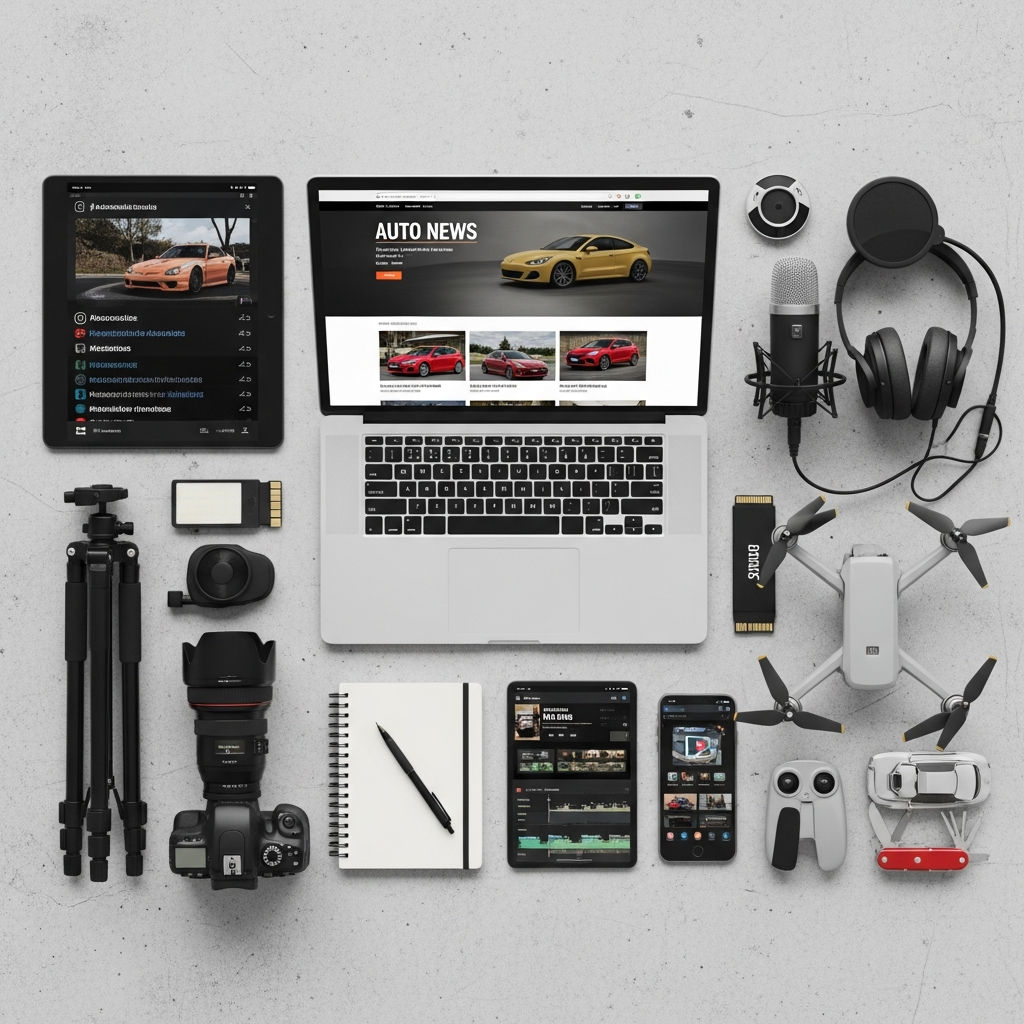
Top 13 Essential Tools for Auto News Success
The automotive industry moves at breakneck speed. From the sudden reveal of a flagship electric vehicle to the shifting tides of autonomous driving regulations, staying ahead in auto news requires more than just a passion for cars. It requires a high-performance digital toolkit. Whether you are a solo automotive blogger, a digital journalist, or a content manager for a dealership, your success depends on how quickly you can identify trends, verify technical data, and reach your audience.
To dominate the automotive niche, you need to master search engine optimization (SEO), high-quality visual storytelling, and rapid-fire distribution. In this guide, we break down the top 13 essential tools for auto news success, categorized by how they help you win the race for rankings and readers.
Category 1: Trend Tracking and News Discovery
In auto news, being second often means being invisible. These tools help you spot the “leaks,” “spy shots,” and “official reveals” before they hit the mainstream.
1. Google Trends
Google Trends is indispensable for auto journalists. It allows you to see what car models are currently spiking in interest. If there is a sudden surge in searches for “Toyota Land Cruiser problems” or “New Tesla Model 3 Highland features,” you can pivot your content strategy in real-time to capture that traffic. It is also excellent for comparing brand popularity across different geographic regions.
2. Feedly
Monitoring dozens of manufacturer pressrooms (like Ford, BMW, and Rivian) can be exhausting. Feedly aggregates RSS feeds from every major automotive news outlet, manufacturer site, and niche forum into one clean dashboard. It ensures you never miss a press release or a niche story from a competitor, allowing you to curate your daily news cycle efficiently.
3. SparkToro
Success in auto news requires knowing where your audience hangs out. SparkToro helps you discover what podcasts your audience listens to, what YouTube channels they watch, and which social media accounts they follow. This is crucial for “audience intelligence”—knowing that Bronco enthusiasts might also be into overlanding gear allows you to create more targeted, high-performing content.
Category 2: SEO and Keyword Strategy
Automotive keywords are some of the most competitive in the world. To rank on the first page of Google for “Best Electric SUVs,” you need data-driven insights.
4. Semrush
Semrush is the gold standard for SEO. For auto news, it is particularly useful for “Keyword Gap” analysis. You can compare your site against giants like Car and Driver or MotorTrend to see which keywords they rank for that you are missing. It also tracks your “Share of Voice,” helping you understand your authority in the automotive niche over time.
5. AnswerThePublic
Car buyers are researchers. They ask hundreds of questions: “How long do hybrid batteries last?” or “Is the Kia Telluride worth the markup?” AnswerThePublic visualizes these search queries into a map of “Who, What, Where, When, and Why.” Answering these specific questions in your articles is a surefire way to win Google’s “Featured Snippets.”
Category 3: Content Creation and Precision Writing
Technical accuracy is paramount in the automotive world. Misreporting a 0-60 time or a battery kilowatt-hour (kWh) capacity can damage your credibility instantly.
6. Grammarly
Even the best writers make mistakes when rushing to cover a breaking news story. Grammarly goes beyond simple spellcheck; it ensures your tone is professional and your technical jargon is used correctly. In a field where “torque” and “torsion” are different things, precision matters.
7. Hemingway Editor
Automotive engineering can be dense. The Hemingway Editor helps you strip away the “fluff” and keep your writing “bold and clear.” It highlights complex sentences that might confuse a casual reader, ensuring your news remains accessible to both gearheads and first-time car buyers.
8. ChatGPT (with Browsing)
AI is a powerful assistant for auto news. While you should never let it write your news reports unsupervised (due to the risk of “hallucinations” regarding specs), it is excellent for summarizing long manufacturer PDF press releases, generating catchy headlines, or creating meta descriptions for your SEO needs.
Category 4: Visual Storytelling and Multimedia
Automotive news is a visual medium. A wall of text won’t engage a reader as much as a high-quality gallery or a short-form video of an exhaust note.
9. Canva
Not every news outlet has a full-time graphic designer. Canva is essential for creating “Spec Comparison” charts, Instagram Stories, and YouTube thumbnails. With its massive library of templates, you can quickly create an infographic comparing the range of three different EVs, which is highly shareable on social media.
10. Adobe Premiere Rush
The “Shorts” and “Reels” revolution has hit the car world hard. Premiere Rush is a mobile-friendly video editor that allows you to edit 4K footage of a new car reveal directly on your phone and upload it to YouTube or TikTok instantly. Speed is the priority here, and this tool delivers.
Category 5: Data Management and Specifications
Getting the specs right is the foundation of automotive journalism. You need reliable databases to cross-reference information.
11. CarQuery API / Edmunds API
For those running more advanced auto news sites, integrating an API like CarQuery allows you to pull technical specifications (engine size, horsepower, dimensions) directly into your articles or car comparison tools. This ensures that your “spec sheets” are always accurate and consistent with industry standards.
Category 6: Distribution and Engagement
Creating the content is only half the battle. You must ensure it reaches the eyes of enthusiasts and potential buyers.
12. Buffer or Hootsuite
Auto news doesn’t just happen during 9-to-5 hours. Buffer allows you to schedule your articles to post across Twitter (X), Facebook, and LinkedIn at peak engagement times. If a car is being revealed at the Tokyo Auto Show while you are asleep in the US, you can have your social coverage pre-scheduled to go live the moment the embargo lifts.
13. Mailchimp
In an era of fluctuating social media algorithms, your email list is your only “owned” audience. Mailchimp allows you to send out a weekly “Auto News Roundup.” Newsletters have high conversion rates for affiliate links and are perfect for building a loyal community that returns to your site every time a new model is announced.
Conclusion: Building Your Auto News Powerhouse
Success in the automotive news space is built on the pillars of speed, accuracy, and visibility. By integrating these 13 tools into your workflow, you transition from being a passive observer to a dominant voice in the industry. Use Google Trends and Feedly to find the story, Semrush to optimize it, Canva to make it beautiful, and Buffer to make sure the world sees it.
The automotive landscape is changing rapidly with the transition to electrification and software-defined vehicles. Having the right toolkit ensures that as the industry evolves, your platform remains the go-to destination for enthusiasts and buyers alike.
Frequently Asked Questions
- What is the most important tool for a new auto blogger? Google Trends is the best starting point to ensure you are writing about topics people actually care about.
- How do I get official press photos for auto news? Most manufacturers have a “Media” or “Press” section on their website (e.g., media.ford.com) where you can download high-res images for editorial use.
- Do I need a high-end camera for auto news? While a DSLR is great, modern smartphones paired with an editor like Adobe Premiere Rush are often sufficient for breaking news and social media content.