
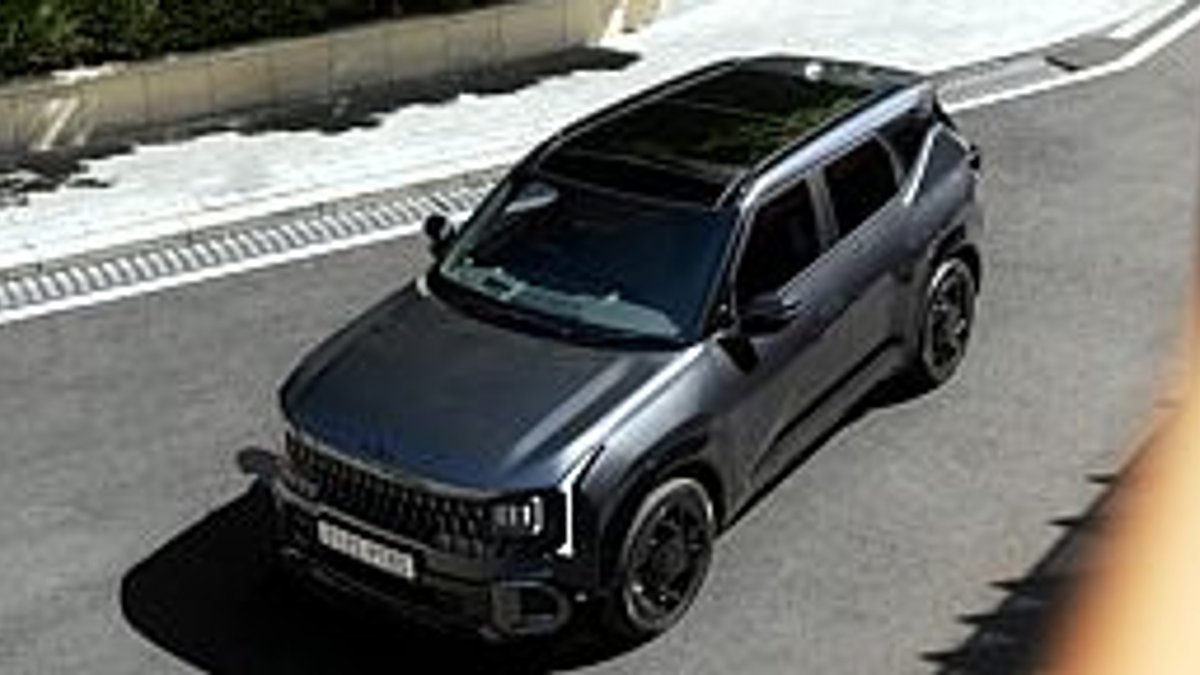
Kia Australia’s marketing director, Dean Norbiato, has stated the brand is comfortable taking sales from Hyundai or any other competitor with its new Seltos, entering the small SUV segment.
Kia Targets Market Share with New Seltos
The new SP3-generation Kia Seltos uses the K3 platform, shared with the current Hyundai Kona. Despite this shared foundation, Kia has no intention of avoiding sales competition with the Kona or other rivals in the small SUV space.
“We respect all competitors in market and would be more than happy and glad to take market share from any of them,” Mr Norbiato said. This applies to competitors beyond just Hyundai. “Any other competitor in the small SUV hybrid space we would be more than willing to encroach from a sales standpoint.”
Car manufacturers that are part of the same corporate group typically try to avoid direct competition. For instance, Volkswagen and Skoda, both under the Volkswagen Group, have made efforts to avoid competing with each other, as reported in 2023. They achieve this by targeting different vehicle segments. A similar approach is taken by the Chery Group, which has multiple Australian brands, including Chery, Omoda-Jaecoo, and Lepas, each targeting distinct buyer profiles for 2026. The Chery Group has also been expanding its Australian brand portfolio, with the arrival of iCaur marking its fifth brand launch since returning to the local market in 2023.
Kia and Hyundai Operate Independently
Kia and Hyundai, although part of the same company, operate as separate entities in Australia. Mr Norbiato stated, “We are separate business entities in this country, and we operate very separately. We see a Toyota, as we see a Hyundai, or a Mitsubishi or any other OEM.”
Local CEO Dennis Piccoli added that Kia is not setting its sights on any manufacturer in particular and is simply focused on growing its own business. “I think the approach that we’ve always had is that we run our own race,” he said. “We don’t target any particular brand. We’re just trying to grow our share as best as we possibly can with our own programming and our own product development.”
When asked if the Kona is the Seltos’ main competitor, Mr Norbiato did not go as far to say that it was, but he did name it as one of its key rivals. “(The Kona) would be one of the bigger ones from a rival standpoint, absolutely,” he said. However, he noted that sales can also come from other segments and customers outside of the existing Kona base. “But it wouldn’t be the only one, and I think you can get volume out of (different categories) as well from other segments, and not necessarily existing Kona customers.”
A Crowded and Competitive Segment
The Seltos enters a sub-$45,000 small SUV segment filled with rivals including the Mazda CX-30, Toyota Corolla Cross, Suzuki Vitara Hybrid, GWM Haval Jolion, Subaru Crosstrek, Renault Symbioz, Mitsubishi ASX, and the Jaecoo J5.
Kia has experienced success in the Australian market, particularly with the SP2-generation Seltos, which sold 9,223 units in 2025, making it the ninth best-selling model in its class. This class comprised 23 rival models, and the Seltos was the third best-selling model for Kia, behind the Sportage mid-size SUV, which sold 19,137 units, and the Kia Carnival people mover, which sold 10,948 units.
The outgoing Seltos had a different powertrain strategy compared to its rival, the Kona. While the Seltos offered two petrol engines, the Kona had greater fuel type coverage, offered in petrol and hybrid guises.
The Seltos has switched to a full hybrid lineup for all six variants. The hybrid system in the Seltos consists of a 1.6-litre engine and a 1.49kWh battery, producing 112kW and 265Nm in two-wheel drive models, with a fuel efficiency rating of 5.1-5.4 litres per 100km. The top-spec GT-Line all-wheel drive variant adds a rear electric motor, increasing power to 126kW, with a claimed combined fuel efficiency of 5.8L/100km.
The new Seltos range is priced from $37,990 to $52,870 plus on-road costs, directly competing with the Hyundai Kona Hybrid, which starts at $36,950.


