
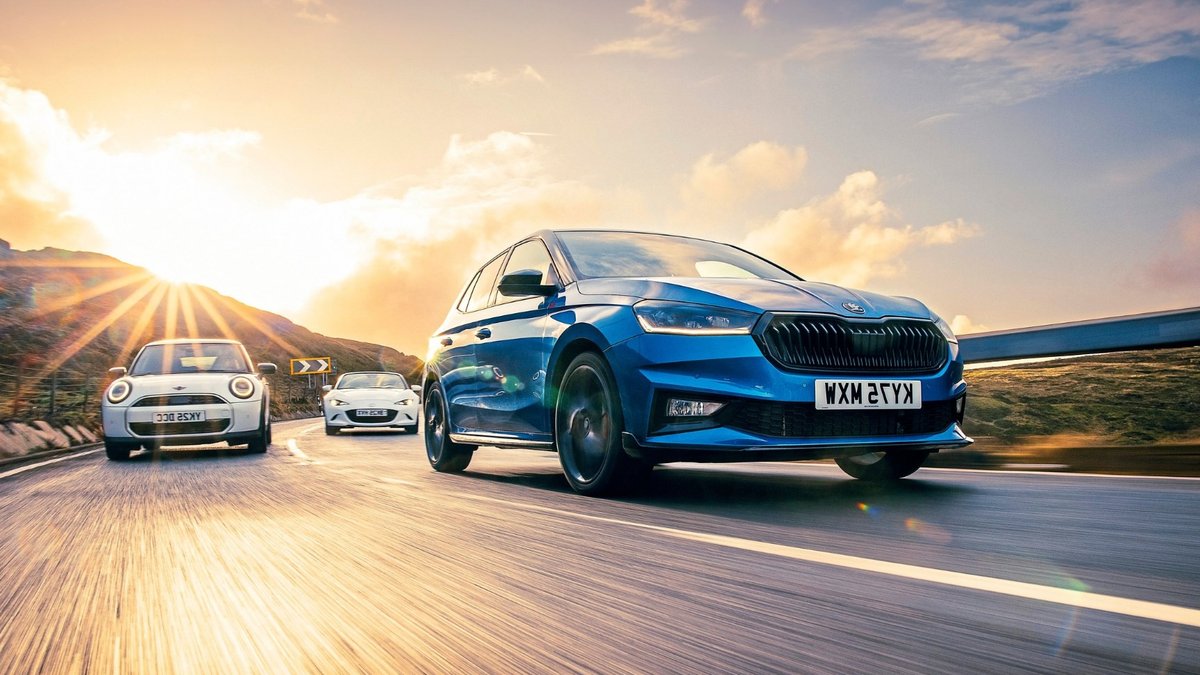
Three affordable sport‑oriented cars— the Škoda Fabian 130, Mazda MX‑5 and Mini Cooper C—were put through a hill‑climb in the Peak District to see how they stack up against each other under a £30,000 price ceiling.
Škoda Fabian 130 delivers unexpected performance
The Fabian 130 is a tuned version of the Monte Carlo trim, featuring a remapped 1.5‑liter turbo that now produces 175 bhp, up from the standard 148 bhp. The car weighs 1,230 kg and accelerates to 62 mph in 7.2 seconds, making it the quickest of the three on the test route.
Škoda equipped the hot hatch with a seven‑speed dual‑clutch automatic that must be placed in sport mode for spirited driving. The gearbox has been recalibrated for sharper downshifts, and an ESC Sport mode plus optional traction‑control off switch add a bit of liveliness. The suspension is the same 15 mm lowered setup as the Monte Carlo, while the steering has been retuned for a heavier feel.
Inside, it keeps the Monte Carlo’s digital instrument cluster and a touchscreen with separate climate controls. The cabin feels utilitarian; sports seats are firm but not comfortable for long trips, and the overall styling— a black front splitter, revised rear spoiler and tailgate decal— looks more like a dealer special than a true hot hatch.
At a price of £30,715 fully equipped, the Fabian 130 sits just under the £30,000 threshold that the test set for “fun, sporty new cars.” Its practicality stands out: a 380‑liter boot and rear seats that can accommodate adults make it a viable family car as well as a weekend enthusiast’s choice.
Related: China’s Affordable Electric Cars: More Value for Less Cash
Mazda MX‑5 remains a lightweight roadster
The fourth‑generation MX‑5, now more than a decade old, continues to sell about 1,500 units a year in the UK. The test car used the 1.5‑liter naturally aspirated engine delivering 129 bhp, paired with a six‑speed manual gearbox. Starting at £28,585, it is the most affordable of the trio.
Despite modest power, the roadster’s rear‑bias and low kerb weight of just over 1,100 kg give it excellent balance. The manual transmission is praised for its precision, making gear changes feel natural even on the steep climbs of Holme Moss.
The interior is deliberately analog, with a large handbrake, clear dials and an 8.8‑inch touchscreen that rarely interferes with operation. The cabin feels like a step back to 2010, which many drivers find refreshing compared with more digital‑heavy competitors.
Mini Cooper C offers sharp steering and a premium feel
The Mini Cooper C tested is the entry‑level model with a 1.5‑liter turbocharged three‑cylinder engine producing 154 bhp. It comes with a seven‑speed automatic and a top‑spec Exclusive trim that adds a panoramic sunroof and Harman Kardon sound system, bringing the price to £32,765.
While the Mini is 60 kg heavier than the Fabian, its steering is described as “quick and direct,” providing confidence through tight corners. The car’s interior features a circular OLED screen that can display classic Mini dials, giving it a distinctive character that the reviewer found more appealing than the Fabian’s more conventional layout.
Related: Mercedes-Benz unveils swanky VLE luxury van for North America
Ride quality is a mixed bag; the standard 18‑inch alloy wheels transmit pothole impacts sharply, but handling improves when driven at higher speeds, where the suspension stiffness becomes less noticeable.
Overall, the Mini’s combination of a premium‑styled cabin and engaging steering makes it the most “fun” of the three when pure driving enjoyment is the priority.
The market for sub‑£30,000 performance cars appears narrow but not extinct. With tightening emissions regulations and rising costs, manufacturers have pulled back on cheap hot hatches, yet Škoda, Mazda and Mini have kept a foothold. If trends continue, future models may need to adopt mild‑hybrid assistance to meet CO₂ targets while preserving the driving feel that enthusiasts value.
In the final stretch, the Fabian 130 proved to be the most practical, offering space and everyday usability without sacrificing the livelier feel of a warm hatch. The Mini Cooper C delivered the sharpest steering and a more upscale interior, while the Mazda MX‑5 retained its reputation for lightweight, balanced driving pleasure.


