
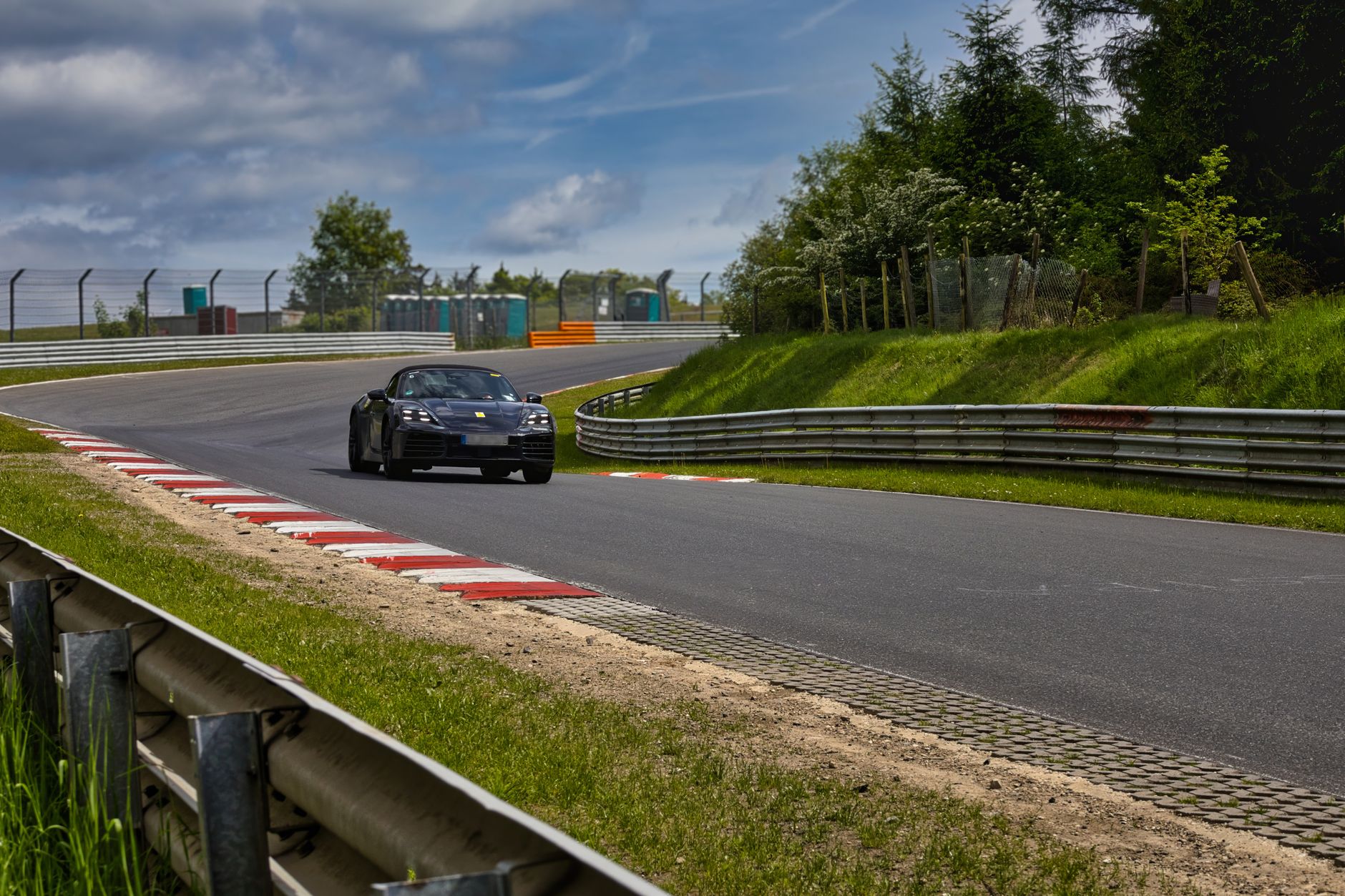
Porsche has confirmed that the upcoming 718 Cayman and Boxster will be offered in both electric and traditional internal‑combustion versions, a shift from the automaker’s earlier all‑electric plan.
CEO says both powertrains will coexist
During a September 19 investor call, CEO Oliver Blume outlined a “strategic realignment” that will keep gasoline models in the lineup while new plug‑in hybrids and fully electric variants are developed. “We will expand and refine our line‑up of ICE models to meet diverse needs and regional market requirements during the transition phase – including newly developed ICE and plug‑in hybrid models,” he said.
Blume added that the brand will also introduce an SUV positioned above the Cayenne in both ICE and PHEV forms, and that “highly emotional ICE derivatives at the upper end of the model line‑up” will complement future battery‑electric versions in the 718 segment. He stressed that these will be new products with “substantial innovations,” not merely updates.
Electric versions promise higher output
According to the briefing, the electric “S” models of the Cayman and Boxster will generate roughly 380 bhp and 440 lb‑ft of torque. The higher‑spec “GTS” will feature a twin‑motor setup delivering about 490 bhp and 550 lb‑ft. A turbo‑badged variant could reach around 600 bhp and 650 lb‑ft, matching the performance envelope of Porsche’s Taycan.
Related: Skoda Fabia Mazda MX5 Mini Face Final Test
Battery capacity will differ by trim.
The S and GTS models are said to use 89 kWh packs, while the Turbo version may employ a 99 kWh unit. The cars will run on an 800‑volt system.
While the rear‑wheel‑drive version will house two electric motors—one per wheel—the all‑wheel‑drive models add a third motor for the front axle. A Scandinavian source familiar with test drivers noted that the rear axle offers “extreme torque vectoring for rapid cornering and real slideability,” a hallmark of Porsche’s handling pedigree.
One reason the electric launch has slipped is supply‑chain trouble. Two battery suppliers faced insolvency, and other component delays pushed the rollout well beyond the original schedule. The postponement, however, may give Porsche a broader market window, as demand for pure‑electric models has softened since early 2023.
In the wider context, the delay means the 718 twins will now compete with newcomers like the MG Cyberster, which is priced between £55,000 and £60,000. Porsche’s pricing remains undisclosed, but the new models are unlikely to be cheaper than the current lineup.
Related: China’s Affordable Electric Cars: More Value for Less Cash
Even with the challenges, the move reflects a pragmatic response to shifting consumer preferences. The company sees a “clear drop in demand for exclusively battery‑electric cars,” according to Blume, prompting a slower rollout of fully electric models while maintaining ICE options.
From a market perspective, the dual‑powertrain strategy could help Porsche manage regional differences in emissions regulations and charging infrastructure. Customers in markets where fast‑charging networks are still developing may prefer a gasoline or hybrid variant, while those with robust EV support can opt for the electric version. This flexibility may protect sales volumes during the transition period.
Production plans for the new SUV above the Cayenne, as well as life‑cycle extensions for existing ICE and PHEV models such as the Cayenne and Panamera, are slated to continue into the 2030s. Porsche’s approach suggests a gradual shift rather than a sudden cut‑over, aligning with its historical emphasis on performance and driver experience.
Overall, the upcoming 718 models illustrate Porsche’s attempt to balance innovation with market realities, offering both high‑performance electric variants and traditional combustion engines as the automotive environment evolves.


