
The Audi A2 e-Tron prototype represents a significant step for the German manufacturer as it enters the electric family hatchback market. Audi resurrects an iconic name from its past, bringing back one of its most innovative and smallest models for the electric age. This all-new A2 e-Tron is designed to sit at the bottom of Audi’s electric model range, and the company claims it will be the most efficient vehicle it has ever produced.
Aerodynamic focus and efficiency claims
Development of the A2 focused heavily on aerodynamics to achieve a drag coefficient of 0.24Cd. Engineers implemented numerous design elements, including an active aero duct, gap reducers in the wheel arches, and contoured panels on the C-pillars. Even the door mirrors were changed to reduce noise and drag, while acoustic side glass is available as an option. The underbody features additional cladding to close off complex geometries.
Related: Top alternatives to the Tesla Model Y
Audi reports that these modifications improve consumption by 1.09kWh per kilometre, with the active air intake contributing an additional 0.19kWh per kilometre. The new A2 uses the same rear-wheel drive MEB+ architecture as the new VW ID.3 Neo. While this means the car shares fixed hardpoints and some components with the wider VW Group, Audi prioritized changes to design and aerodynamics to maximize efficiency.
Specs and performance details
The prototype model tested uses a 61kWh lithium iron phosphate battery. It supports DC charging up to 105kW, allowing for a 10 to 80 percent charge in 26 minutes. The vehicle is equipped for vehicle-to-load and vehicle-to-home bi-directional charging. Dr. Benedikt Hackl, the energy system project manager, described the car as “not only a beautiful car but a beautiful power bank.”
Driving impressions and efficiency test
Steering is fluid and accurate, though it lacks some road feel. Body control is balanced and taut when cornering, and the car remains calm and quiet at motorway speeds, aided by the acoustic glass. However, pedal modulation is mixed. The throttle offers granular feedback for precise control, while the brakes lack initial bite, a characteristic common to many VW Group models using the MEB toolkit.
Related: Electric Cars Struggle in Cold Weather
Regeneration braking is strong, offering three stages selectable via steering wheel paddles. When turned off, the car tends to coast. Our efficiency run, conducted with the air conditioning on at 22°C and using efficiency drive mode, achieved 5.45 miles per kWh. That figure exceeds the simulations run by Audi’s own engineers.
The interior and design choices
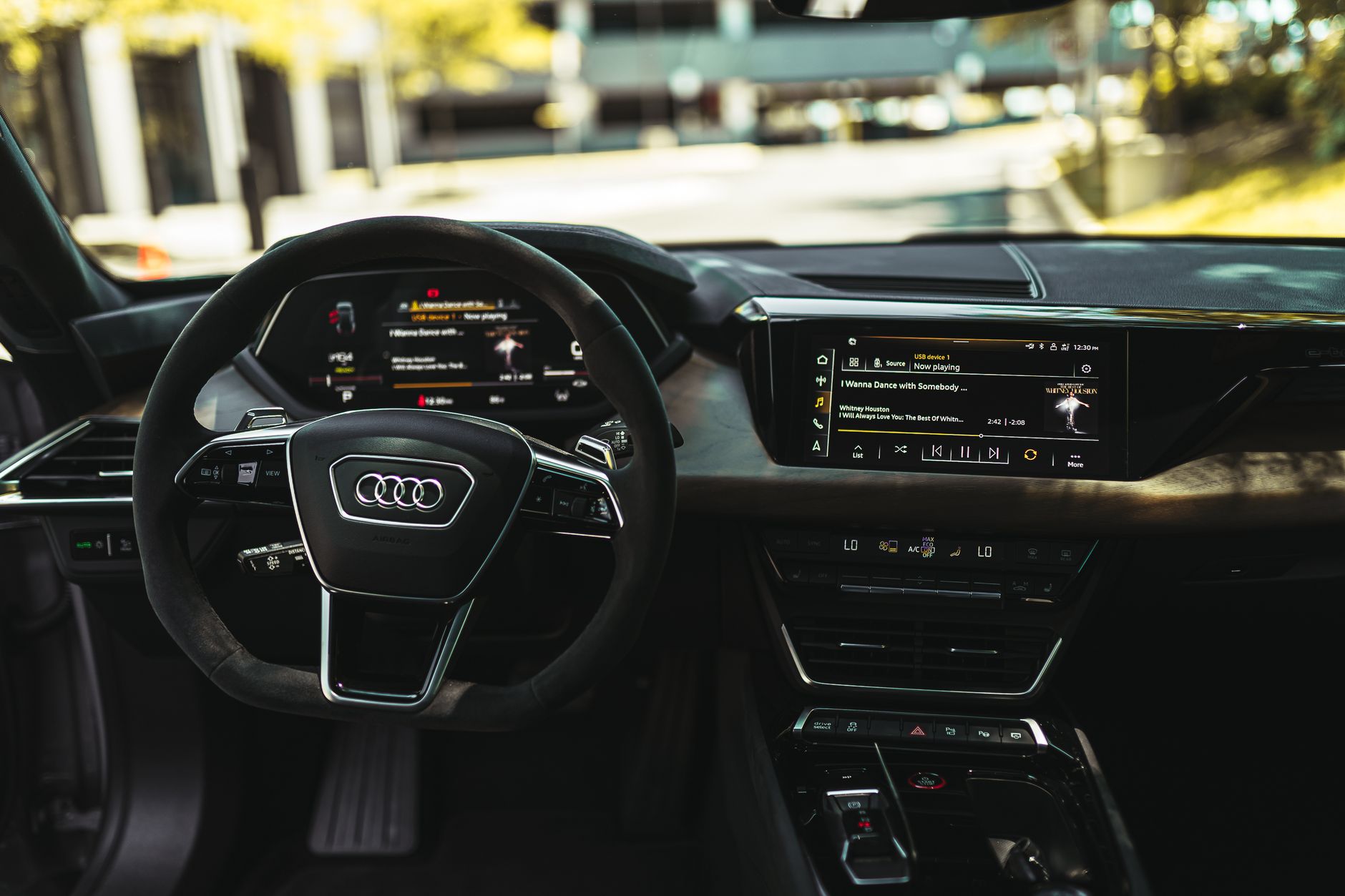
Because the car is a prototype, the interior is largely bagged up. However, it shares the “digital stage” curved display and the new steering wheel controls seen in the new Q3. The prototype features a centre armrest and a tray below the screens. Getting inside requires using the powered, finger-pull door handles. These fixed panels are aerodynamically neutral, and the pull area is narrow with no tactile mechanism, making them feel clumsy to operate.


