
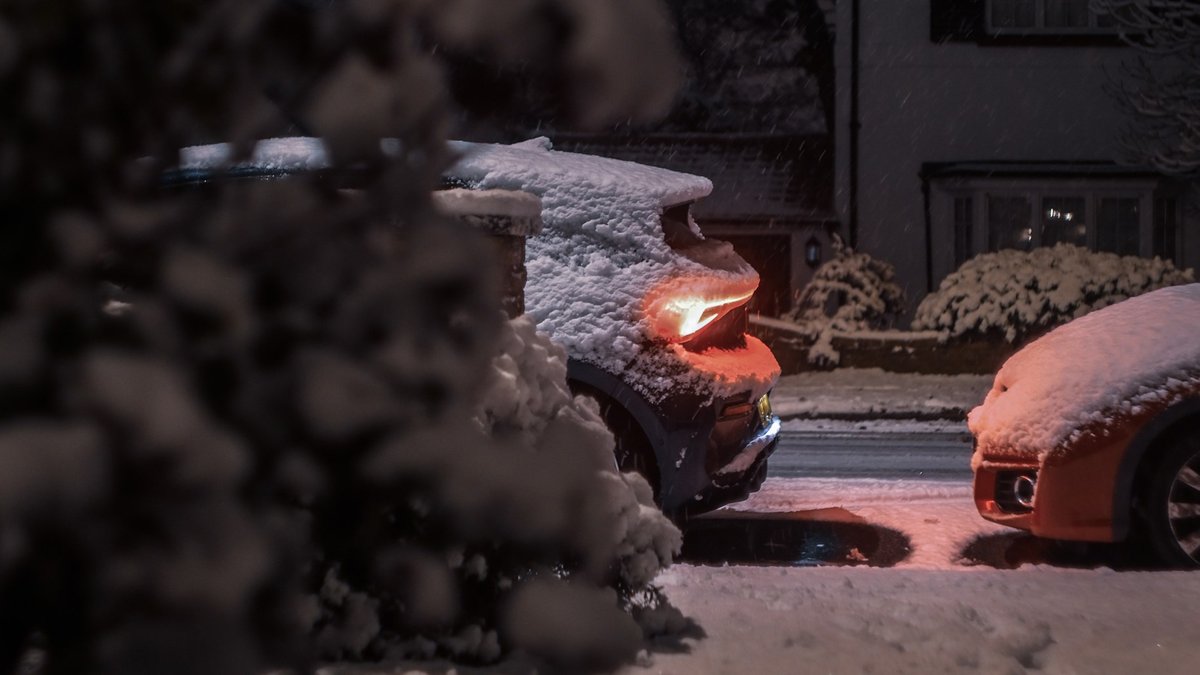
Winter has officially hit the UK, and with it, a significant issue for electric car owners: reduced battery range in cold weather. The plummeting temperatures have led to many EV owners realizing that their batteries’ performance and driving range suffer significantly in cold weather.
Just like the battery in your smartphone or laptop, the batteries in electric cars rely on controlled chemical reactions to store and release electricity – and, like all chemical reactions, they’re sensitive to temperature.
How Cold Weather Affects Electric Cars
Most EVs warm up their car’s battery to the correct temperature, but this also consumes precious energy. The end result? When the mercury plummets, so does EV battery efficiency and available range.
Cold weather typically brings additional demands on a car’s systems: in a wintry snap, most drivers will turn the cabin temperature up, activate demisting, and switch on heated seats and steering wheels, where fitted – all features that make us toasty, but draw more power from the batteries on board.
Once again, the range takes a hit. The outlet has lived with enough EVs in winter to experience the fall in performance first-hand.
Our experience suggests that extremely cold weather will typically trim somewhere between a fifth and a third off the range of your EV – and sometimes significantly more. It affects every electric vehicle, but some seem better able to cope with snow and ice than others.
Related: Range Rover GT First Drive Verdict
For instance, the Honda E city car’s tiny 35kWh lithium-ion battery could only muster a claimed 125 miles, according to the official WLTP claim; in practice, that meant 100 miles of usable range in the summer, plunging to 80-90 miles in winter months.
In the middle of this issue, it’s essential to consider the practical implications for EV owners. As they adapt to the reduced range, they must also think about how to maximize their vehicle’s efficiency. This might involve changing their driving habits, such as reducing their speed or avoiding unnecessary accessories that drain the car tax benefits.
The Norwegian Automobile Federation is particularly interested in this topic, as Norway has moved faster into EVs than any other country – and since it suffers extreme winter weather, motoring organisations test electric vehicle winter range annually to see how manufacturer claims stack up to real-world conditions.
There are a few handy tips to extend the range of your electric car in cold weather. Be sure to charge up your EV at home, if you have charging facilities available. That way, you’ll start most journeys with a full charge.
Many EVs have a pre-heating function. On some models, this is only available when the car is plugged in – it’s a great benefit to have, de-icing windows and warming the cabin to make driving in cold conditions quicker and comfier.
Be careful, too, with which accessories you use when you’re driving. Heating, seat warmers, and other ancillaries will all draw charge and reduce your range.
Related: Volkswagen recalls 50,000 Jettas over fire risk
Tesla was fined in South Korea for inaccurate range claims in cold temperatures. The Korea Fair Trade Commission fined the manufacturer 2.85 billion won (£1.9 million at the time) for failing to fully inform customers about the range potential of the cars in cold temperatures.
According to the Korea Fair Trade Commission, Teslas’ range drops by as much as 50% in extreme cold weather.
Better, more efficient batteries that are less susceptible to cold are being developed all the time. For instance, battery tech company StoreDot has come up with a new type of battery cell that it claims can still deliver 70% of its charge in temperatures of -20deg C – colder than the conditions during the test.
It’s also worth noting that electric car batteries can struggle to fully recharge in very cold temperatures. StoreDot claims its latest XFC battery cells can recharge up to 80% of their capacity at -10deg C.
Apart from energy conservation, electric cars are subject to the usual rules of motoring in winter. For example, we strongly recommend winter or all-seasons tyres like the Bridgestone Blizzak or Michelin CrossClimates to keep you going in cold or slippery conditions.


