
Chinese carmakers are pushing the boundaries of automotive technology, introducing features that range from the genuinely useful to the outright bizarre.
Take the Yangwang U9, an electric supercar with a 2,978bhp engine. It’s not just fast—it can also jump over potholes thanks to its DiSus-X suspension, an active hydraulic system. BYD, its parent company, claims this feature is practical, but it’s hard not to see it as a flashy gimmick.
From tank turns to rocket boosters
The Yangwang U8 SUV takes things further with its tank turn capability, allowing it to spin 360 degrees on the spot. It’s also semi-amphibious, though the mechanical strain of such maneuvers might make engineers wince.
Denza, another BYD sub-brand, offers the Z9 GT, a 1,140bhp electric estate with self-parking tech. It can slide into tight spots sideways, though this feature may be as hard on tires as it is impressive.
BYD’s Flash Chargers promise to transform EV charging with a 1,500kW rate, capable of charging a battery from 10 to 97 percent in nine minutes. However, only a few Denza models can currently handle this speed.
Charging and Smart Integration Innovations
Nio takes a different approach with battery swaps. Their automated stations can replace an empty battery in three minutes, though this requires a network of dedicated stations.
Xiaomi’s HyperOS integrates its cars with 200 smart home products, allowing drivers to pre-heat their homes. While convenient, it’s unclear how many will use this feature.
The Denza B8 includes a roof-mounted drone that can follow the car, return to it, and even take off while the vehicle is moving. Useful for aerial footage, perhaps, but otherwise a novelty.
HiPhi’s X and Y models feature split rear doors, with the bottom half opening like a regular door and the top half lifting like a gullwing. This unique design maximizes entry space.
The HiPhi Z takes doors to another level with LCD screens embedded in them, though the company’s financial troubles cast doubt on its future.
Zeekr’s Mix offers dual sliding doors on each side, a practical solution for tight spaces, though it may evoke memories of the Peugeot 1007.
Advanced Steering and Door Designs
The IM LS8 combines four-wheel steering with a steer-by-wire system, giving the SUV a 9.7-meter turning circle despite its size.
XPeng’s P7+ boasts semi-autonomous tech that handles highways with minimal driver input, though it remains unavailable in Europe.
BYD’s cell-to-body batteries integrate the battery pack into the car’s chassis, improving energy density and space efficiency, though challenges remain in crash protection and temperature regulation.
Chery’s 540-degree camera system adds underbody cameras to the standard 360-degree view, useful for off-roading but perhaps overkill for most drivers.
The Rox 01 includes an optional kitchen with an induction cooker, a first for a standard car, though it’s more campervan than commuter vehicle.
Arcfox’s Kaola targets families with its integrated baby seat and excretion mode, which detects and eliminates diaper-related odors.
Family-Focused Features and In-Car Entertainment
In-car karaoke machines are common in Chinese cars, with XPeng’s upcoming X9 bringing this feature to Europe.
Range-extender EVs like the Xiaomi Skynomad N70 Max claim 908 miles of range, though real-world figures are likely lower.
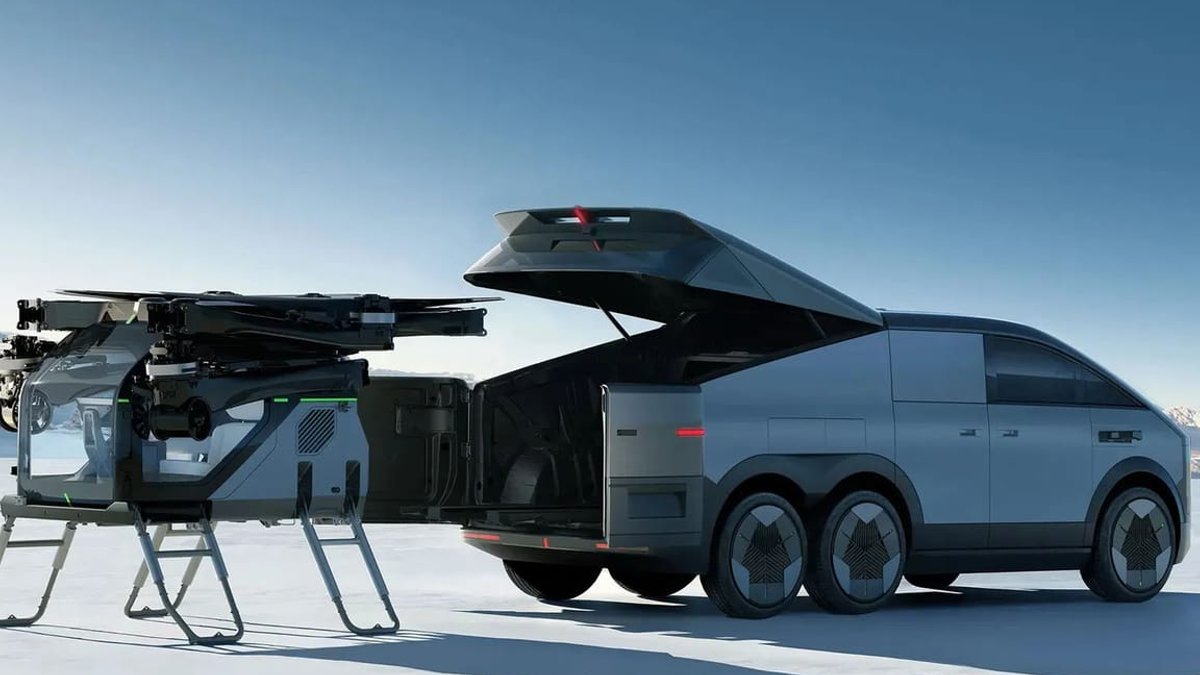
XPeng’s Land Aircraft Carrier is a six-wheeled vehicle with a docking station for a two-person electric VTOL aircraft. With 7,000 orders already, it’s set to launch by 2026, though regulatory hurdles remain.
Finally, the Dreame Nebula Next 01 concept car promises rocket boosters for a 0-62mph time of 0.9 seconds. While it sounds like science fiction, Dreame insists it’s possible, though production remains uncertain.
The Nio ET9 introduces the SkyRide suspension, a hydraulic system that ensures a smooth ride by keeping the body level over bumps. It can also rock the car side to side when stationary, useful for clearing snow or leaves, though it might annoy passengers. This contrasts with the Yangwang U9’s DiSus-X suspension, which allows the car to jump over potholes, a feature that could see the U9 spending half its time airborne in Britain.
While these chargers are not exclusive to BYD, only a few Denza models currently support this speed. Nio’s battery swap stations, on the other hand, offer a different solution, replacing an empty battery in three minutes, though this requires a network of dedicated stations.
Xiaomi’s HyperOS allows drivers to integrate their cars with 200 smart home products, enabling features like pre-heating homes. While convenient, its practical use remains questionable. The Denza B8 takes integration further with a roof-mounted drone that can follow the car, return to it, and take off while the vehicle is moving at up to 16mph, though this seems more like a novelty than a necessity.
Futuristic Concepts and Regulatory Challenges
The HiPhi X and Y models feature split rear doors, with the bottom half opening conventionally and the top half lifting like a gullwing, maximizing entry space.
This innovation enhances maneuverability in tight spaces. In contrast, the Arcfox Kaola focuses on family needs with an integrated baby seat and an excretion mode that detects and eliminates diaper-related odors, a unique feature targeting parents with young children.
The Rox 01 introduces an optional kitchen with an induction cooker, a first for a standard car, though it leans more towards campervan functionality. Meanwhile, in-car karaoke machines, a staple in Chinese cars, are set to make their European debut with the XPeng X9, offering a new way for passengers to entertain—or annoy—each other during journeys.
Chinese carmakers’ adoption of range-extender EVs is evident in models like the Xiaomi Skynomad N70 Max, which claims a 908-mile range on the CLTC test cycle, though real-world figures are likely lower. The XPeng Land Aircraft Carrier, a six-wheeled vehicle with a docking station for a two-person electric VTOL aircraft, has already garnered 7,000 orders and is set to launch by 2026, despite regulatory challenges.
While such features sound like science fiction, they highlight the bold ambitions of Chinese carmakers in pushing the boundaries of automotive technology.


