
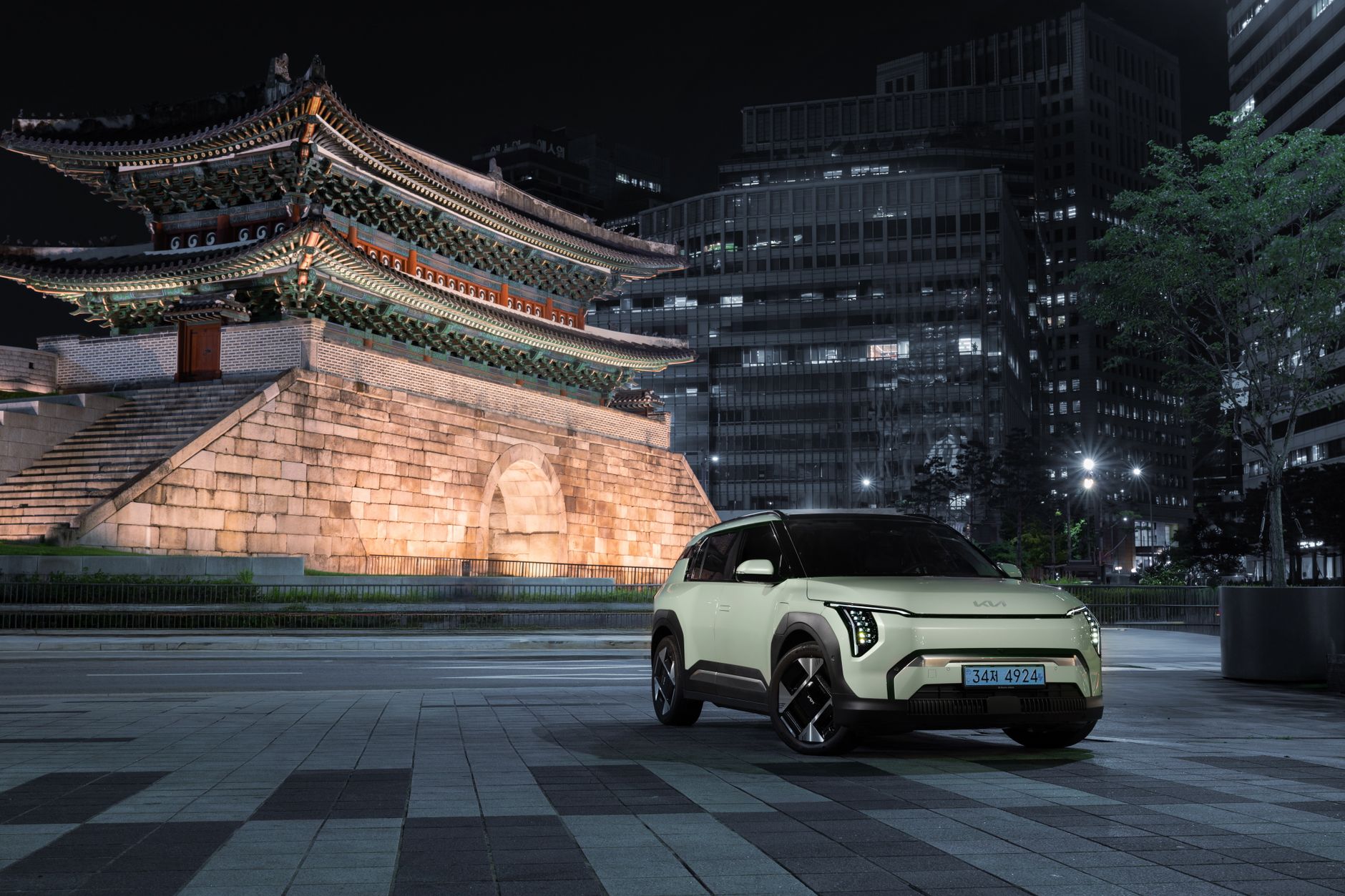
The DS No.7 E-Tense marks the French automaker’s first fully electric SUV and its strongest attempt to reverse years of sluggish sales. With a claimed range exceeding 400 miles, bold styling, and a high-end cabin, it competes directly with the Audi Q4 e-tron and Tesla Model Y. Its high price, however, could limit its appeal.
An electric SUV with French flair
The No.7, previously known as the DS 7, uses the same platform as the Citroën e-C5 Aircross and Vauxhall Grandland Electric, reflecting Stellantis’ strategy of sharing components across brands. While the DS No.8 fastback is electric-only, the No.7 offers both hybrid and battery-powered options, with the E-Tense variant leading the lineup.
Buyers can choose from three versions: a base model with a 73.7 kWh battery and 227 horsepower, a Long Range edition with a 97.2 kWh battery and identical power output, and the Long Range AWD, which includes a second motor for a combined 345 horsepower. The entry-level model delivers 337 miles of range, while the Long Range extends that to 423 miles—outpacing the Audi Q4 e-tron’s best figure by about 75 miles.
A test drive in southern France revealed the Long Range model averaged 4.0 miles per kilowatt-hour, suggesting real-world range near 390 miles. Charging reaches a maximum of 160 kW, enabling a 20% to 80% top-up in roughly 30 minutes.
Comfort over performance
The No.7 excels in refinement. Standard acoustic side windows make it one of the quietest SUVs in its segment, even among electric vehicles. The ride remains smooth, particularly with smaller wheels.
Handling takes a backseat. The steering wheel’s unconventional four-spoke design requires adjustment, especially for drivers used to a traditional grip. Acceleration feels sufficient but unexciting, aligning with the car’s laid-back personality.
Related: Ferrari’s electric supercar fetches $40m at auction
The cabin showcases DS’s distinctive approach. Materials are premium, featuring Alcantara upholstery on higher trims. The design stands out more than those of German competitors, though some controls are awkwardly placed.
Interior space is ample. The boot offers 560 liters of storage, though the sloped roofline slightly restricts flexibility. Rear seats fit most adults comfortably, though the electric version’s raised floor—due to its large battery—reduces legroom compared to the hybrid.
Standard equipment is generous even in the base Pallas trim, which includes a 16-inch touchscreen, heated front seats, and wireless phone charging. Upgraded trims add a 360-degree camera and Matrix LED headlights.
DS has a history of overpricing its models. The No.7 E-Tense starts at £49,190—nearly £10,000 above the Citroën e-C5 Aircross, despite sharing much of the same engineering. Even against rivals like the Audi Q4 e-tron and BMW iX1, the DS costs more, though it justifies some of the premium with extra range and standard features. Leasing rates are also high, reflecting the brand’s weak resale values.
Luxury brands often charge extra for prestige, but DS hasn’t established that yet. Its sales remain weak, with only 112 UK registrations in the first half of 2026. The No.7 represents its best chance to improve, though only if pricing becomes more competitive. For now, it remains an intriguing but expensive choice.
The car’s refusal to conform to convention gives it charm. In a segment crowded with conservative designs, the No.7’s flat front and two-tone paint ensure it turns heads. It prioritizes comfort and individuality over outright speed, offering a refreshing alternative in a market fixated on efficiency numbers.


