
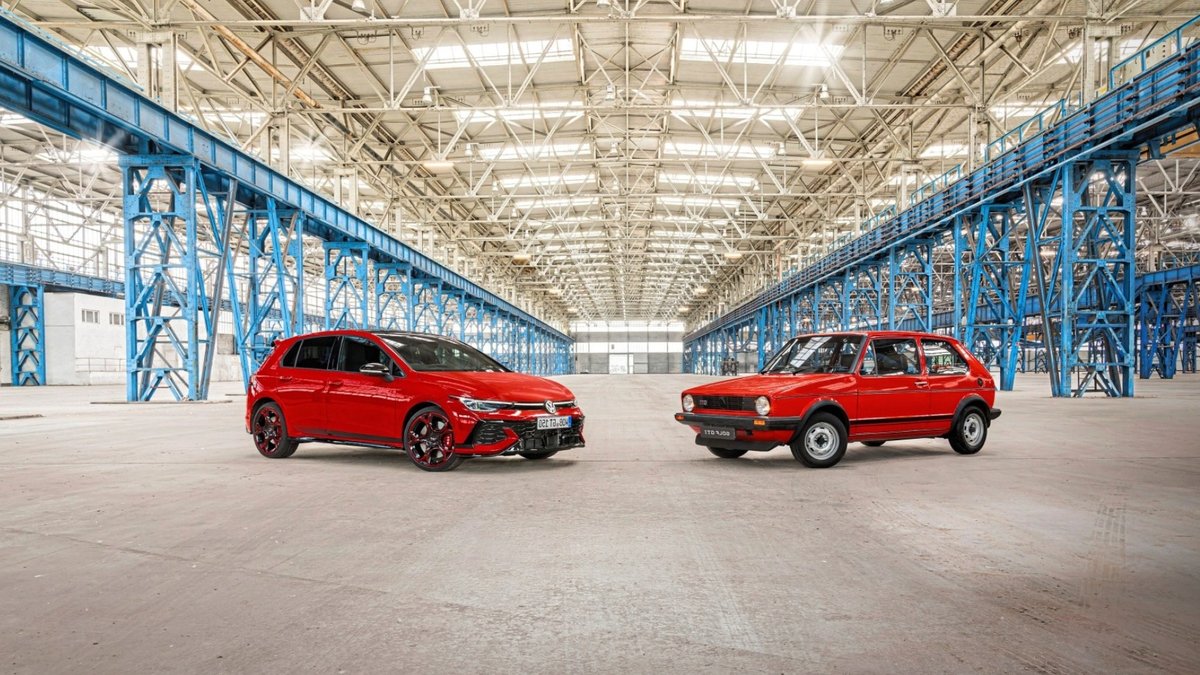
The Volkswagen Golf GTI turns 50 this year, marking half a century of a model that has shaped the hot‑hatch segment while exposing the challenges of keeping a performance badge fresh across multiple generations.
How the GTI emerged from an unlikely start
The story began in the early 1970s, when Volkswagen was still tied to the Beetle’s rear‑engine layout. After the death of long‑time chief Heinrich Nordhoff in 1968, the company began exploring front‑wheel‑drive designs, eventually producing the Golf – a compact yet roomy car inspired by the Fiat 128. In May 1974 the Golf launched to immediate success, selling a million units within two years.
A few engineers, led by test specialist Alfons Löwenberg, saw an opportunity to add sportiness to the new model. Their idea was initially kept secret, with Anton Konrad, then head of VW’s public‑relations, arranging clandestine meetings over beer and sandwiches. The team built early prototypes under Scirocco sheet metal, testing a twin‑carb 1.5‑litre engine that produced about 100 bhp. After several iterations, chief engineer Hermann Hablitzel secured approval for a production version, despite board member Ernst Fiala deeming it “far too expensive.” The final design featured a 110‑bhp fuel‑injected 1.6‑litre engine, anti‑roll bars, and a lowered ride height, earning the GTI name – Grand Touring Injection.
Related: Jaguar Type 01 Reveals New Interior Design
The GTI debuted at the 1975 Frankfurt Motor Show, distinguished by black wheel‑arch extensions, a subtle rear spoiler and the now‑iconic red grille stripe. Interior touches such as plaid cloth trim and a golf‑ball‑shaped gear knob were contributed by Gunhild Liljequist, Volkswagen’s first female designer. Weighing just 840 kg, the car could sprint from 0‑60 mph in 9 seconds and top out at 113 mph, making it the fastest Volkswagen of its time.
Evolution, missteps, and the search for identity
Sales quickly exceeded expectations: 30 000 units in the first year and 420 000 by the end of the Mk1 run. Over five decades, more than 2.5 million GTIs have been produced, but the model’s journey has not been smooth. The Mk3 Golf’s bulky design and the Mk8’s glitchy infotainment system both drew criticism for diluting the GTI’s appeal. Early generations also lagged behind rivals; Toyota introduced a twin‑cam 16‑valve engine in 1973, while Volkswagen waited until 1986 to fit a similar unit to the Mk2 GTI.
The Mk2 era saw a proliferation of powertrains, including a 158‑bhp supercharged G60 and various 1.8‑litre options, turning the GTI into a badge more than a single‑purpose vehicle. The Mk3’s 2.0‑litre eight‑valve engine produced only 114 bhp, prompting a 1993 upgrade to a 148‑bhp 16‑valve version. Volkswagen also experimented with narrow‑angle VR6 engines, culminating in the high‑performance R32 that later inspired the Golf R line.
The Mk4 attempted to broaden the market with a turbocharged 1.8‑litre offering 148 bhp, plus a diesel variant, but lost the signature red grille stripe. Former VW chief Bernd Pischetsrieder later called the model “too slow, too average,” highlighting the tension between mass appeal and performance heritage.
Related: Range Rover GT First Drive Verdict
Modern platforms and the GTI’s future
The Mk5, built on the PQ35 platform, returned focus to a single 2.0‑litre turbo engine delivering 197 bhp, paired with a six‑speed manual or dual‑clutch gearbox. Red trim reappeared around the grille, reinforcing visual continuity.
Subsequent generations moved to the MQB architecture, allowing parts sharing across larger models like the Passat and various Group SUVs. Ulrich Hackenberg, who oversaw the Mk6 and Mk7, described the Mk7 GTI as “the most over‑engineered in history,” a consequence of using higher‑volume components to reduce costs.
Because the same platforms underpin Audi, Seat and Skoda models, those brands have produced their own “GTI‑style” hot‑hatches, such as the Audi S3 and Seat Leon Cupra. This diffusion has blurred the GTI’s distinctiveness, prompting some observers to question whether the badge still signals a unique driving experience.
Related: Electric Cars Struggle in Cold Weather
The legacy is mixed. On one hand, it pioneered a segment that combined everyday practicality with spirited performance. On the other, its identity has been stretched by cost‑saving measures and platform sharing, turning the badge into a flexible marketing tool rather than a strict performance guarantee.
For everyday drivers, the GTI’s evolution means a car that can still serve as a reliable commuter while offering a dash of excitement, yet owners may find newer models less distinctive than the original hatch that sparked a cultural shift.
Volkswagen continues to produce the GTI alongside the higher‑output Golf R, which now boasts 328 bhp and sub‑4.6‑second 0‑62 mph times. Whether the GTI will retain its status as the quintessential hot hatch depends on the company’s ability to balance broad market demands with the performance ethos that first defined the model.


