
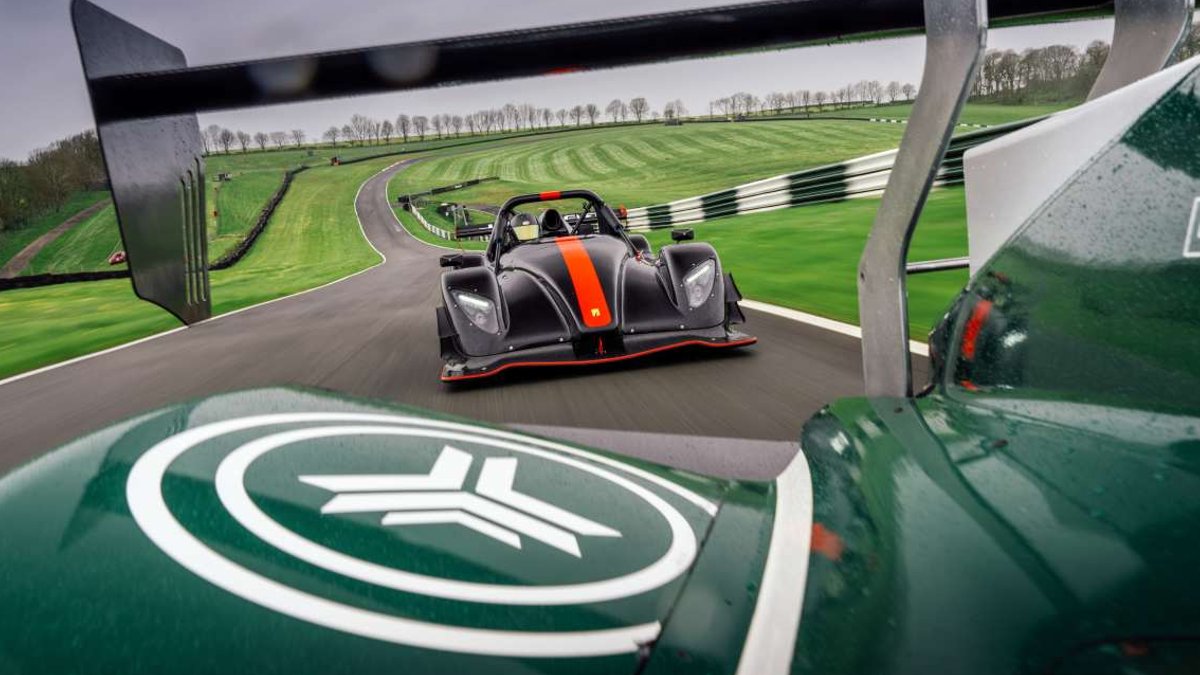
The track test at Cadwell Circuit pitted two purpose‑built race cars against each other: the Radical SR3 XXR and the Revolution 500 Evo, both designed for pure track use rather than road legality.
The event attracted enthusiasts from around the world.
Radical SR3 XXR: Light, Agile, and Focused
The SR3 XXR is the fifth generation of Radical’s long‑running model, launched in 2022. It carries a 1.5‑litre RPE‑engine that produces 232 bhp and is paired with a six‑speed paddleshift gearbox and a Quaife limited‑slip differential. Weighing just 699 kg, it is the second‑lightest car on the day, trailing only the Caterham.
Its tubular chassis and low centre of gravity give the car a reputation for tiny braking zones and high corner speeds. Drivers noted that the brakes are exceptionally strong, allowing later entry into corners than many of the larger, more powerful rivals. The engine, derived from a Suzuki motorcycle, revs high and demands a high‑revving driving style to stay in its powerband.
“I really enjoy the precision of the Radical,” said driver Dickie after his stint. “It’s impervious to inertia: it’s all about carrying as much speed as you can. The other cars are all dominated by something… the Radical is just a pure, polished thing.”
The SR3’s focus on handling over outright straight‑line speed is evident in its lap times. Despite a modest 232 bhp, the car recorded a best lap of 1:30.85, placing it second fastest of the day. Its lightweight construction and aerodynamic bodywork, including a rear wing that generates significant downforce, help maintain stability at high cornering speeds.
Revolution 500 Evo: Power and Flexibility
The Revolution 500 Evo is a larger, heavier machine at 981 kg, powered by a 3.5‑litre supercharged V6 delivering 500 bhp and 410 lb‑ft of torque. The engine, originally Ford‑sourced, has been re‑engineered by Revolution and includes a new gearbox capable of handling the increased torque.
Adjustable components such as a new rear wing, larger brakes, and a configurable differential allow the car to be tuned for different driving conditions. The F1‑style steering wheel offers multiple settings for power‑steering assistance, traction control, and engine modes, giving drivers a high degree of control over the vehicle’s behaviour.
Related: Tesla owners rush to sell amid policy shifts
Despite its size, the car remains surprisingly agile. The optional centrifugal clutch system eliminates the need for a traditional racing clutch, making it a “two‑pedal” car that is easier to drive out of the pit lane. Traction control smooths torque delivery, allowing drivers to keep the foot flat while the system modulates power to prevent wheelspin.
During the test the Revolution posted a best lap of 1:26.75, more than four seconds quicker than the SR3 XXR. Its larger fuel tank—90 litres compared with the SR3’s 77 litre—did not hinder its performance, demonstrating the effectiveness of its aerodynamic package and powertrain.
“It’s a car you can really hustle – engaging and fun,” said driver JB. “Even when you’re not leaning on the aero and going all‑out, it’s still a pleasure to drive.”
When comparing these two cars, the Revolution clearly targets a different market segment. It aims to provide a cost‑effective alternative to Le Mans‑style prototypes, while the SR3 fits within a one‑make cup series that runs in twelve regions worldwide. Price reflects this split: the Revolution 500 Evo costs £228,000, more than double the SR3 XXR’s £108,000 price tag.
Both vehicles are purchased by enthusiasts for recreation as much as for competition. Roughly half of the buyers for each model use them primarily for track‑day enjoyment, with the remainder entering them in various racing series.
Historically, the SR3 has been a staple in club‑level competition, whereas the Revolution’s design leans toward higher‑profile prototype racing. This distinction mirrors past trends where lightweight, low‑power cars excel in agility‑focused events, while higher‑displacement machines dominate outright speed categories.
In the end, driver preference comes down to what they value most on the track. Dickie favoured the SR3’s precision and linear power delivery, while JB appreciated the Revolution’s raw V6 character and adjustable systems. The test highlighted how each car excels in its own domain, offering distinct experiences for drivers seeking either pure handling or sheer power.


